Hi, I'm Shayan,
A Gameplay Programmer.
Godot and Unity Gameplay Programmer with experience in crafting responsive player controllers , AI behaviors, and immersive game system
More About MeRecent Works
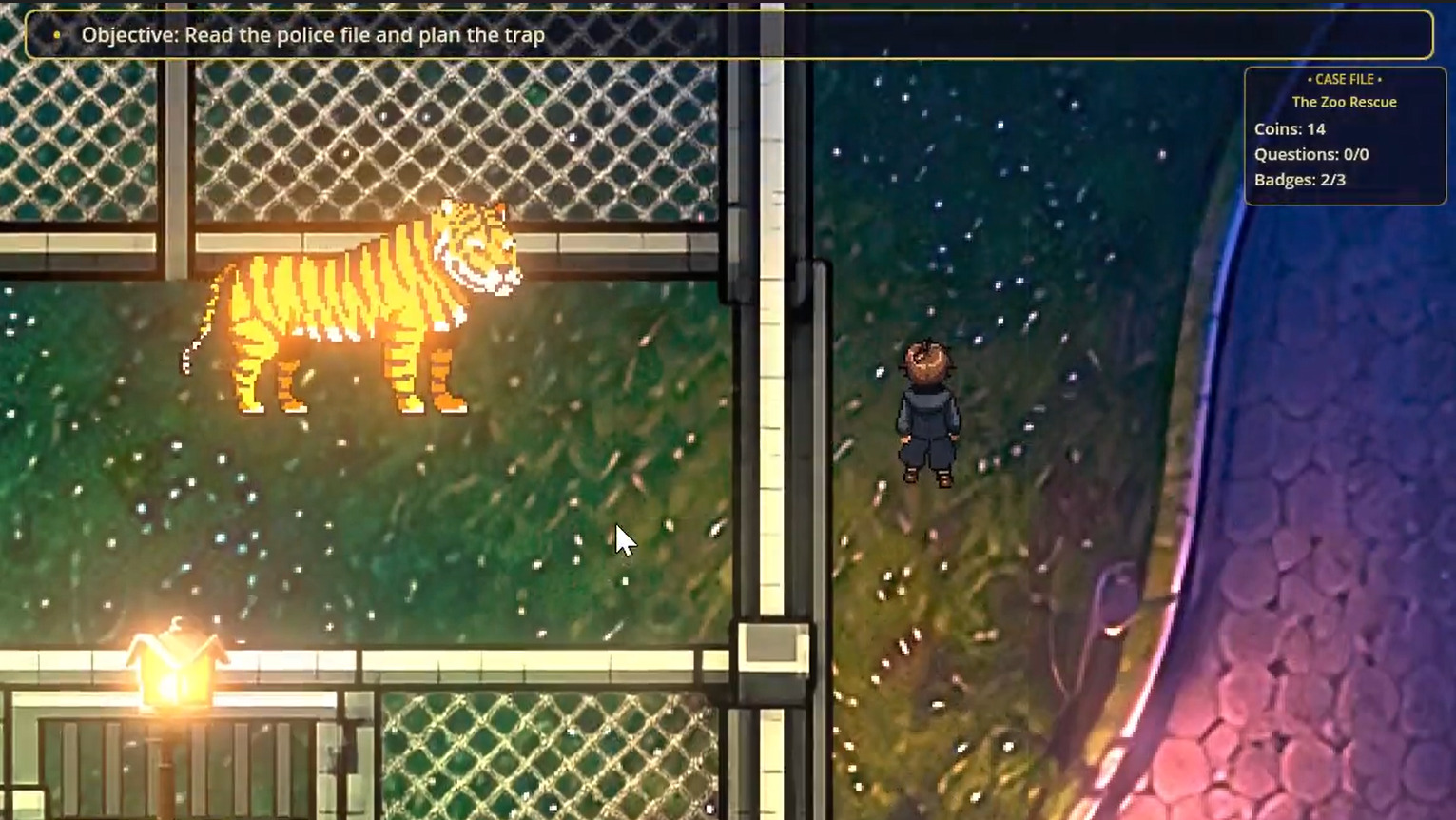
Black Phantom
Black Phantom
Black Phantom was a solo gameplay project focused on investigating and capturing a mysterious thief. I developed the core investigation system around talking to police, gathering information, and making decisions that influence the outcome of the case.
To improve the gameplay and atmosphere, I implemented dialogue and decision-based interactions, along with visual effects such as particles, shaders, camera effects, and environmental feedback to create a tense investigative experience.
The game was designed around player choices, where the information gathered and decisions made throughout the investigation determine whether the player successfully captures the thief or fails the case.
This project helped me improve my understanding of dialogue systems, branching decisions, interactive gameplay, and visual polish while creating a simple but engaging investigation experience.
- Created - 22 June 2026
- Technologies - Godot, GDScript, GPU particles, UI, CharacterBody, Shader, Built-in Godot animation system
- Role - 2D game
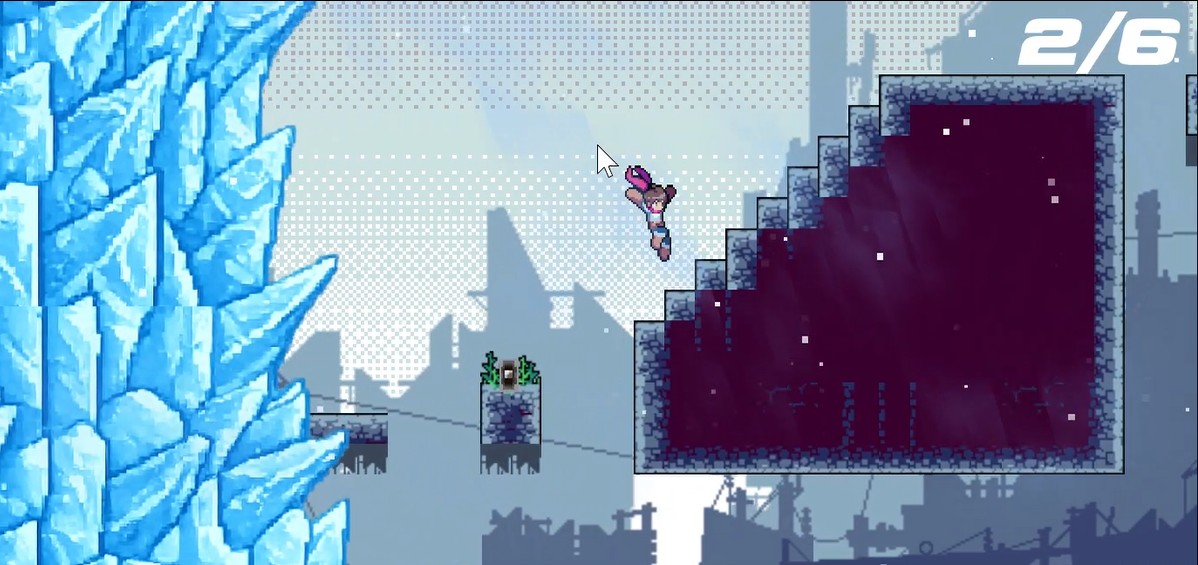
Wall of doom
Wall of Doom
Wall of Doom was a solo 10-day gameplay project where I built the entire game from scratch. I developed the player controller with animations and scripted movement, and designed the core mechanic around an approaching wall that triggers game over on collision.
To improve gameplay feel and visuals, I added an ice shader effect to the wall, a parallax system for consistent vertical tracking, and camera shake for impact and tension. The level was built using tilemaps, and interactive levers were implemented using trigger-based logic, allowing the player to temporarily slow down the wall.
I also solved the problem of unclear interaction timing by adding a progress bar around the lever, giving clear feedback before activation. To enhance atmosphere, I used GPU-based particle effects to create a snow environment with lightweight visual noise and blur-based particles.
This project helped me understand the importance of polish and game feel even in simple mechanics, and gave me hands-on experience with shaders, particles, camera effects, and player feedback systems.
- Created - 22 Dec 2025
- Technologies - Godot, GDScript, GPU particles, UI, CharacterBody, Shader, Built-in Godot animation system
- Role - 2D game
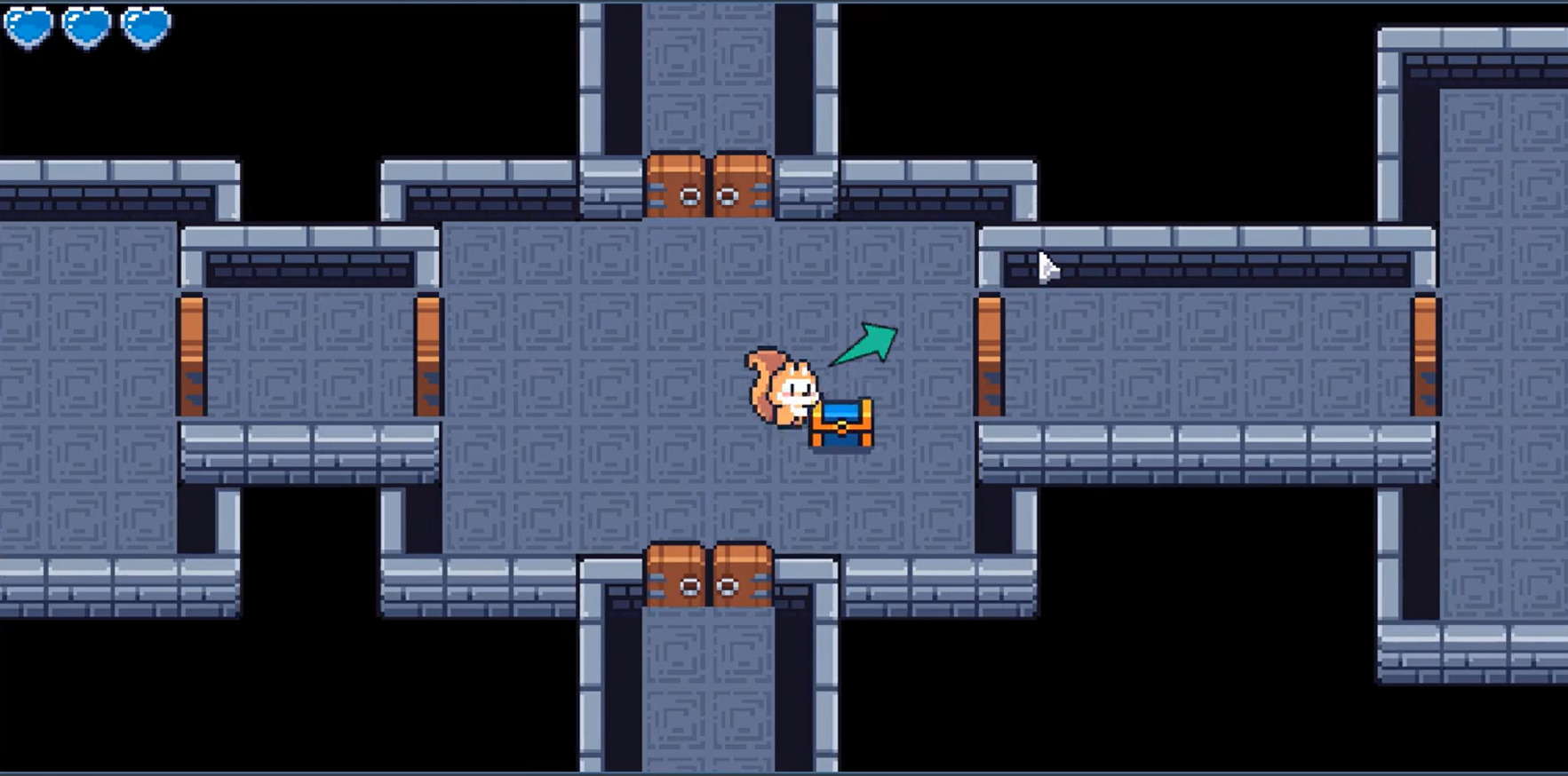
Procedural Dungeon Generator
Procedural Dungeon Generator
The Procedural Dungeon Generator project focused on creating a system that generates a unique dungeon layout each time the game starts. Using Godot’s TileMap system and GDScript, I designed a generation workflow that placed rooms based on tile coordinates while dynamically connecting them through pathways and openings.
The generation logic worked by first creating a grid structure, then selecting valid room positions and checking surrounding tile availability before placing walls, floors, and openings. Once rooms were generated, door objects were instantiated separately and attached through scripted alignment logic that matched doorway positions with neighboring rooms.
One of the main challenges was handling door placement and corner consistency between randomly generated rooms. Some generated layouts caused doors to overlap with walls or corners to disconnect visually. I solved this by adding directional checks and validation rules before placing openings, ensuring that doors only spawned when adjacent room connections were valid. I also implemented corner correction logic that adjusted tile placement depending on neighboring wall structures, helping maintain cleaner room transitions and reducing broken layouts.
Another challenge was preventing isolated or unreachable rooms. To solve this, I added connection checks during generation to guarantee that each newly spawned room remained linked to the main dungeon path.
This project improved my understanding of procedural generation, tile-based logic, coordinate systems, and dynamic object placement. It also strengthened my problem-solving skills when working with randomized systems and taught me how important validation and fallback logic are in procedural game design.
- Created - 1 April 2026
- Technologies - Godot, GDScript, GPU particles, UI, CharacterBody, Built-in Godot animation system
- Role - 2D game
Castlevania Combat2
Castlevania Combat2
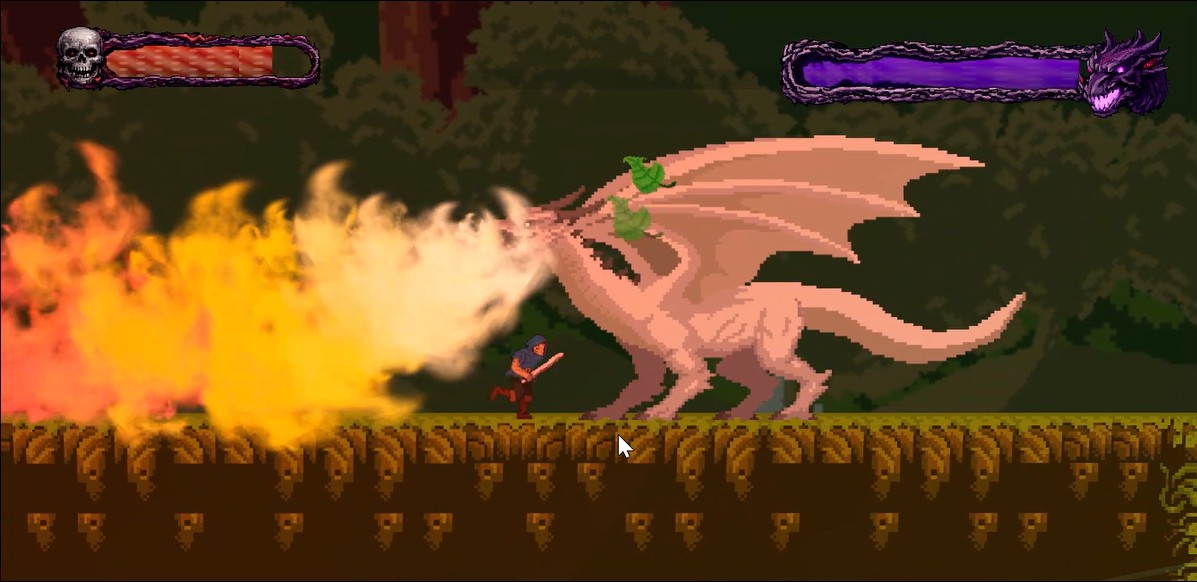
Castlevania Combat 2 focused on building a boss-driven gameplay experience centered around a dragon boss fight as the main encounter of the level. The dragon can fly and track the player while using continuous fire attacks, implemented using GPU particle systems for dynamic flame effects.
To make the fire interact with the environment, I used occlusion layers on the tilemap so the flames properly blend with the level geometry. I also added a shader-based heat tint effect on a Sprite2D overlay to create a reddish atmospheric distortion during fire attacks. Additional environmental effects like wind and falling leaves were also created using GPU particles.
The dragon includes multiple combat states: aerial fire attacks, grounded combat with claw strikes, and a landing transition controlled through AnimationPlayer. It can also chase the player on the ground and be stunned through continuous attack pressure, adding a risk-reward combat loop.
The player was given a special ability that allows teleporting behind the enemy to deal damage, enhanced with a screen flash using CanvasLayer effects and subtle VFX lighting. Time slowdown effects were implemented using tweens to emphasize impact moments during combat.
One challenge was making the fire visually believable while still interacting with the tilemap, which I solved using occlusion layering and shader-based environmental tinting. Another challenge was balancing multiple boss states (air, ground, stun), which required careful state control and animation syncing to avoid transitions feeling abrupt or inconsistent.
This project helped me improve my understanding of boss fight design, state management, VFX-driven gameplay feedback, and environmental storytelling. It also strengthened my ability to combine shaders, particles, and gameplay systems into a cohesive combat experience.
- Created - 20 Dec 2025
- Technologies - Godot, GDScript, GPU particles, UI, CharacterBody, Built-in Godot animation system
- Role - 2D game
Castlevania Combat
Castlevania Combat
Castlevania was a gameplay-focused project where I worked on building a full 2D action system using GDScript and a tilemap-based environment. I started by integrating externally created character animations and implemented movement systems using AnimationPlayer combined with scripted controls.
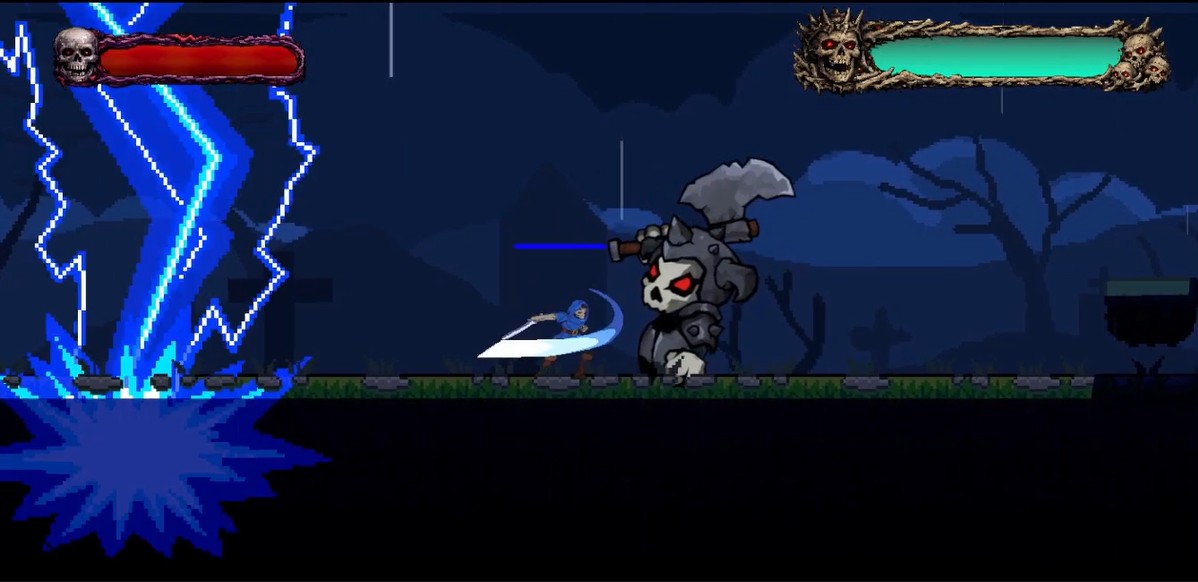
I developed enemy behaviors including bats with detection-based attack zones using Area2D, and boars with directional chase logic based on player position. Enemies used tween-based death transitions for smooth fading effects before being removed from the scene. I also implemented a boss system with multiple attack patterns, ranged behavior, UI-based health display before arena entry, and a shock/progression mechanic that increased based on combat intensity.
The environment included procedural elements such as weather and lighting effects, including GPU-based rain particles and a dynamic lightning system that adjusted intensity and coverage based on boss positioning. I also implemented screen-based lightning flashes using opacity-driven sprites to create impact effects.
One key challenge was building a believable lightning system with proper tilemap lighting, which I solved by adjusting occlusion shapes to preserve ground visibility while keeping atmospheric darkness above. I also calculated strike distances dynamically to correctly align lightning animations with the ground impact point.
This project improved my understanding of enemy AI design, combat feedback systems, and environmental effects, while also strengthening my problem-solving skills in shader lighting, tilemap interaction, and gameplay polish.
- Created - 7 Dec 2025
- Technologies - Godot, GDScript, GPU particles, UI, CharacterBody, Built-in Godot animation system
- Role - 2D game
Multiplayer Racing game
A multiplayer game to demonstrate Gameplay system
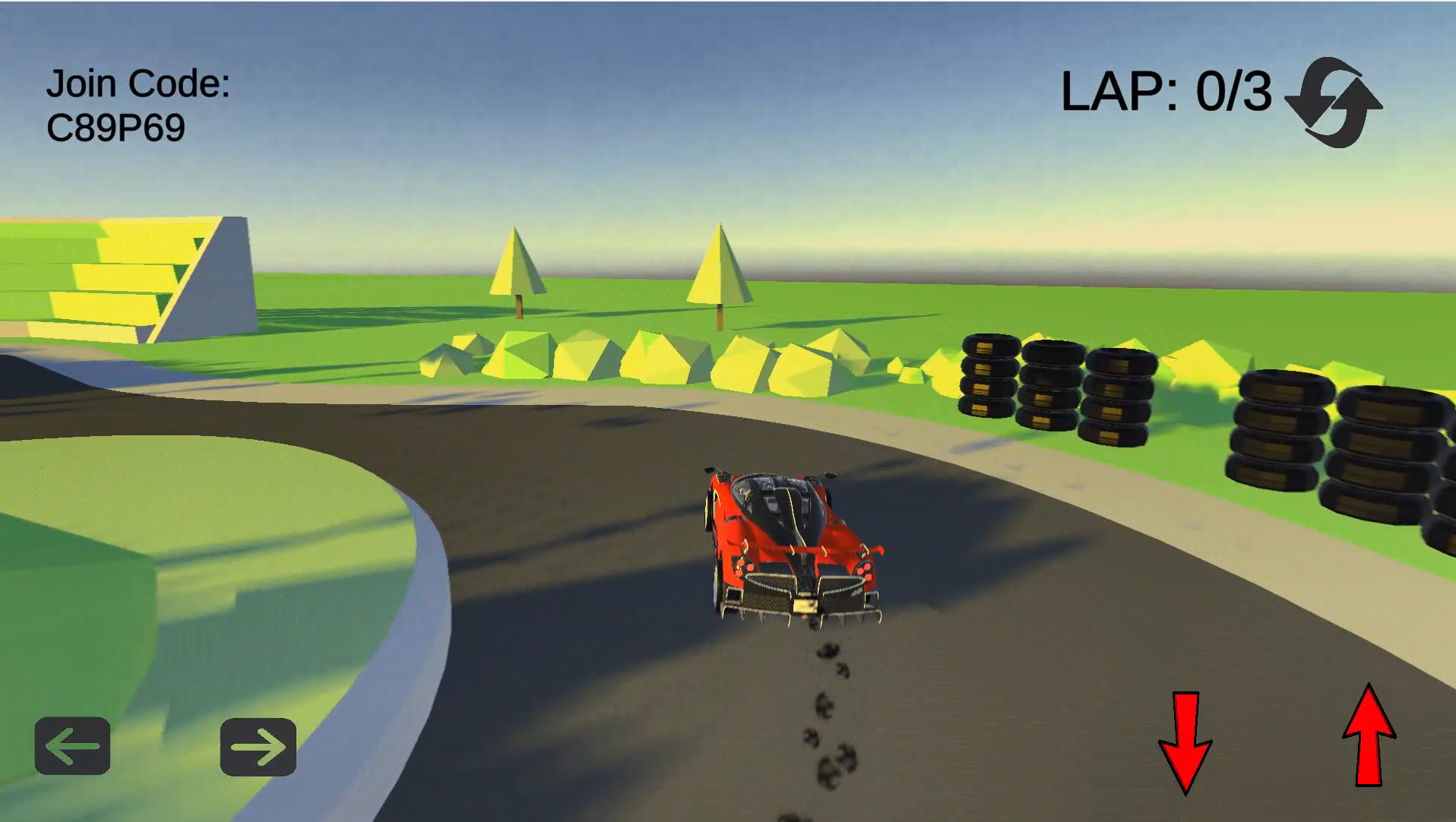
Built a real-time multiplayer 3D racing game in Unity, implementing physics-accurate car handling with WheelColliders, synchronized visual effects, and multiplayer-aware respawn logic. Engineered centralized lap tracking and win/lose states for consistent gameplay across clients, while optimizing for mobile with smooth camera systems, responsive UI, and lightweight performance.
- Created - 5 july 2025
- Technologies - Unity, C#, netcode, UI, Particle systems, URP
- Role - 3D game
- Play Demo version(Multiplayer does not work in demo)- https://shayan-memon.itch.io/demo-racing-game
Battle of gears
Battle of gears
Battle of Gears was a Unity game jam project developed for an itch.io boss-themed competition, focused on fast-paced combat and layered boss mechanics.
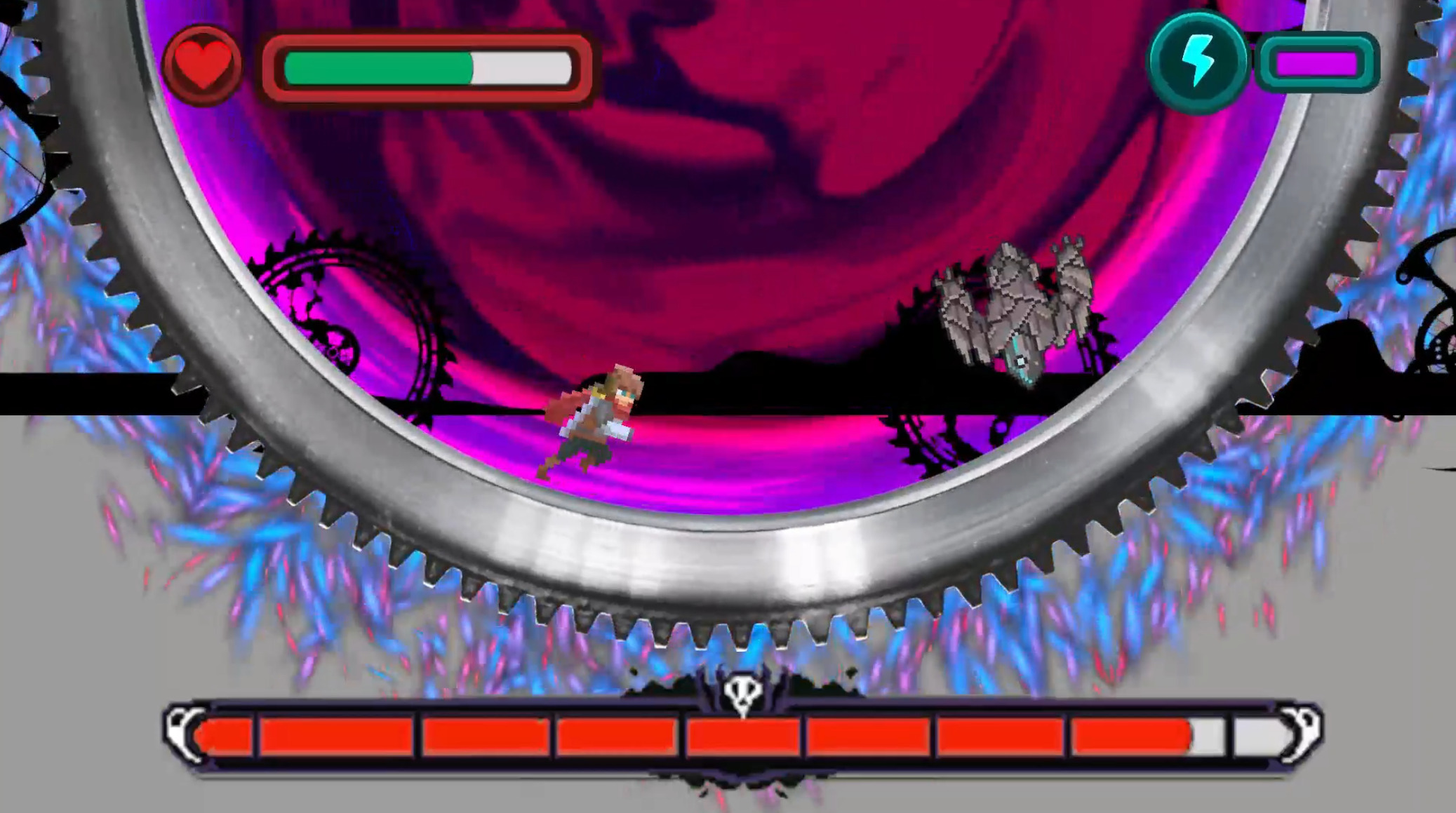
I started by setting up player movement and animation systems, then built the core gameplay around a rotating gear arena where the player moves inside a spinning circular collider, creating unique movement constraints and momentum-based gameplay.
The first boss, a flying golem, featured raycast-based laser attacks visualized using LineRenderer, along with a directional arm attack that tracked the player using scripted aiming logic. I also added VFX for damage feedback such as sparks for enemies and blood effects for the player.
I designed a special attack system where the player builds charge over time, with faster charging during successful dodges using slow-motion effects. Once charged, the player can unleash a high-impact continuous strike ability with modified gravity for enhanced gameplay feel.
Later bosses included varied attack patterns such as multi-directional laser systems, punch attacks, and a tornado-based pull mechanic that acted like a magnetic force field using proximity-based scripting. I combined these mechanics with particle effects and VFX to enhance readability and impact.
One of the main challenges was implementing stable player movement on a rotating gear, which I solved by introducing a central pivot system to maintain correct player orientation. Another challenge was building convincing laser attacks, which I achieved using raycasting combined with dynamic LineRenderer adjustments and directional logic for multi-laser behavior.
This project improved my understanding of boss design, gameplay feel, VFX integration, and physics-based movement systems. It also strengthened my ability to rapidly prototype complex mechanics under game jam constraints.
- Created - 10 aug 2025
- Technologies - Unity 2D, C# particle systems, URP
- Role - 2D fighting game
- View - https://shayan-memon.itch.io/battle-of-gears
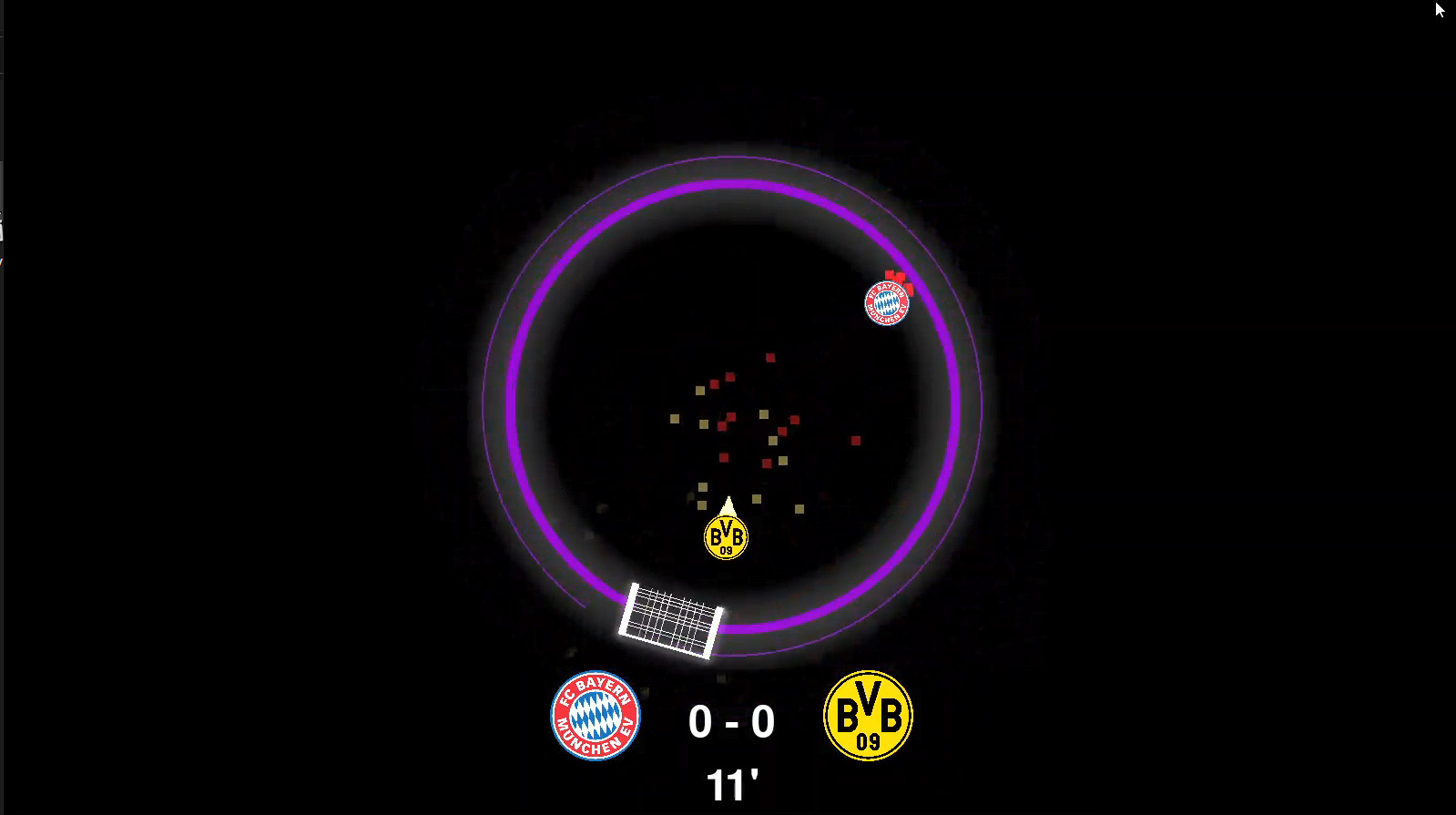
Ball simulation
A simple ball simulation game
Developed a simple ball simulation that uses proper use of physics, particle systems and some extra effects.
- Created - 10 aug 2025
- Technologies - Unity 2D, C# particle systems, URP
- Role - 2D Ball simulation
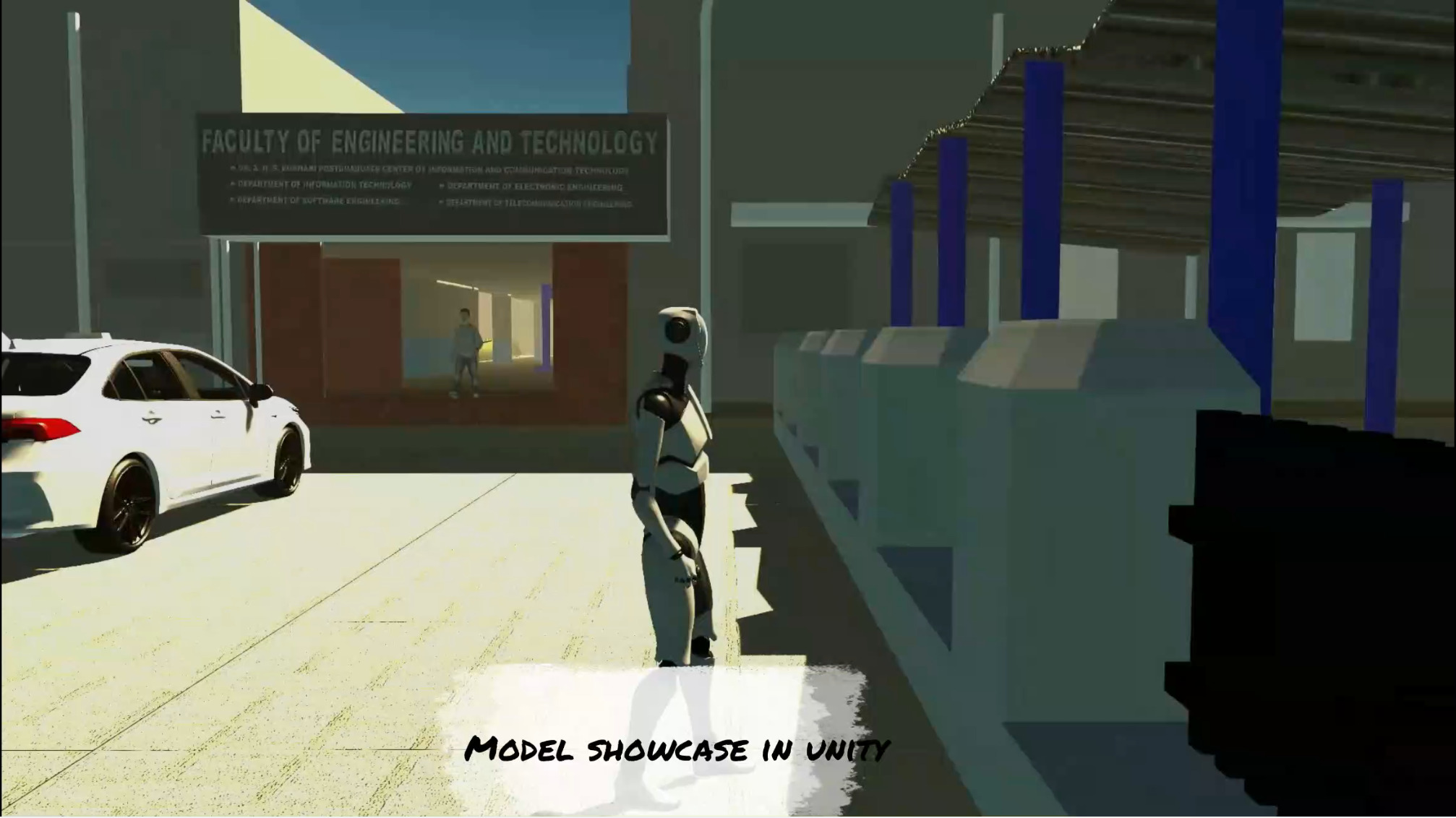
FET Department Simulation
A University Department Simulation
Developed a 3D model for University Department to be explored.
- Created - 10 June 2025 - Ongoing
- Technologies - Unity 3D, C# , URP, Blender, Shaders
- Role - 3D simulation
My Experience
Game Engines & Frameworks
More than 4 yearGameplay Systems & Mechanics
More than 3 yearsProgramming Languages
More than 4 yearsUnity (2D/3D game)
Experienced in Unity 2D and 3D game development, including gameplay systems, combat, AI behaviors, shaders, VFX, animations, and mobile optimization. Comfortable working with multiplayer basics using Netcode, integrating Blender assets, and creating smooth, responsive gameplay experiences for both PC and Android.
Godot 4.5
Skilled in Godot 4.5 with experience in GDScript, procedural generation systems, inventory systems, CharacterBody mechanics, GPU particles, custom shaders, and the built-in animation system for creating polished 2D games.
Pygame (2D simulations)
Advanced proficiency in Pygame for 2D simulations and game prototypes. Strong command of Python-based game loops, sprite management, collision detection, and creating interactive educational simulations.
Player Movement & Input Systems
Responsive character controllers with smooth movement, input buffering, and platform-specific optimizations.
Combat / Ability Systems
Melee, ranged, and ability-based combat with combo chains, cooldowns, and damage calculations.
Physics & Collision Systems
Physics-based interactions, collision detection, raycasting, and environment mechanics.
Animation & State Machines
Character animation blending, state machines, and animation-driven gameplay events.
Multiplayer Networking
Basic client-server architecture, state replication, and multiplayer-aware game logic.
Particle Systems
Visual effects creation using GPU and CPU particles for environment and gameplay feedback.
C#
I have been using C# for over 2-3 years as my primary language for game development, mainly within Unity. I build gameplay systems such as player controllers, combat mechanics, enemy AI, UI logic, and core game architecture for both 2D and 3D projects.
Through freelance and personal projects, I’ve focused on creating scalable systems, improving performance, and enhancing gameplay responsiveness. This includes implementing responsive movement systems, AI behaviors, and modular combat systems while keeping code clean and maintainable.
GDScript
Experienced with GDScript for gameplay programming in Godot, developing player controllers, AI behaviors, procedural dungeon generation systems, shaders, and interactive gameplay mechanics for both 2D and 3D projects.
Python
Experienced with Python and Pygame for creating 2D games and gameplay prototypes, including custom physics, animations, AI behaviors, particle systems, and interactive game mechanics through object-oriented programming.
About Me
Hi, I'm Shayan Memon
Over the past four years, I’ve specialized as a Gameplay Programmer, creating both 2D and 3D projects in Unity and Godot. My work includes combat systems, responsive player controls, enemy AI, visual effects, and GPU-based particle systems, with a strong focus on smooth and engaging gameplay.
Since 2022, I’ve worked as a freelancer on Fiverr and Upwork, collaborating with international clients and consistently delivering successful projects that have earned strong feedback. Beyond freelance work, I’ve also participated in some itch.io game jams, rapidly prototyping mechanics and experimenting with new ideas under tight deadlines.
I’ve explored Godot-specific features such as shaders, GPU particles, and CharacterBody systems, further strengthening my ability to implement visually striking and mechanically robust gameplay. Combined with foundational multiplayer experience using Unity’s Netcode, these projects have sharpened my problem-solving skills and improved my adaptability across different genres and technologies.
Experience
4 + YearsCompleted
80 + ProjectsQualification
Education
University of Sindh, Jamshoro
Bachelor in IT (Information Technology)
2022 - 2025Gexton
Learned Python fundamentals and programming concepts
2021-2022
